Your Amazing Human Body 🧍
Your body is the most amazing machine you will ever own — and it is alive! Right now, without you thinking about it at all, your heart is beating, your lungs are breathing, and your brain is reading these words. Let's take a tour inside yourself.
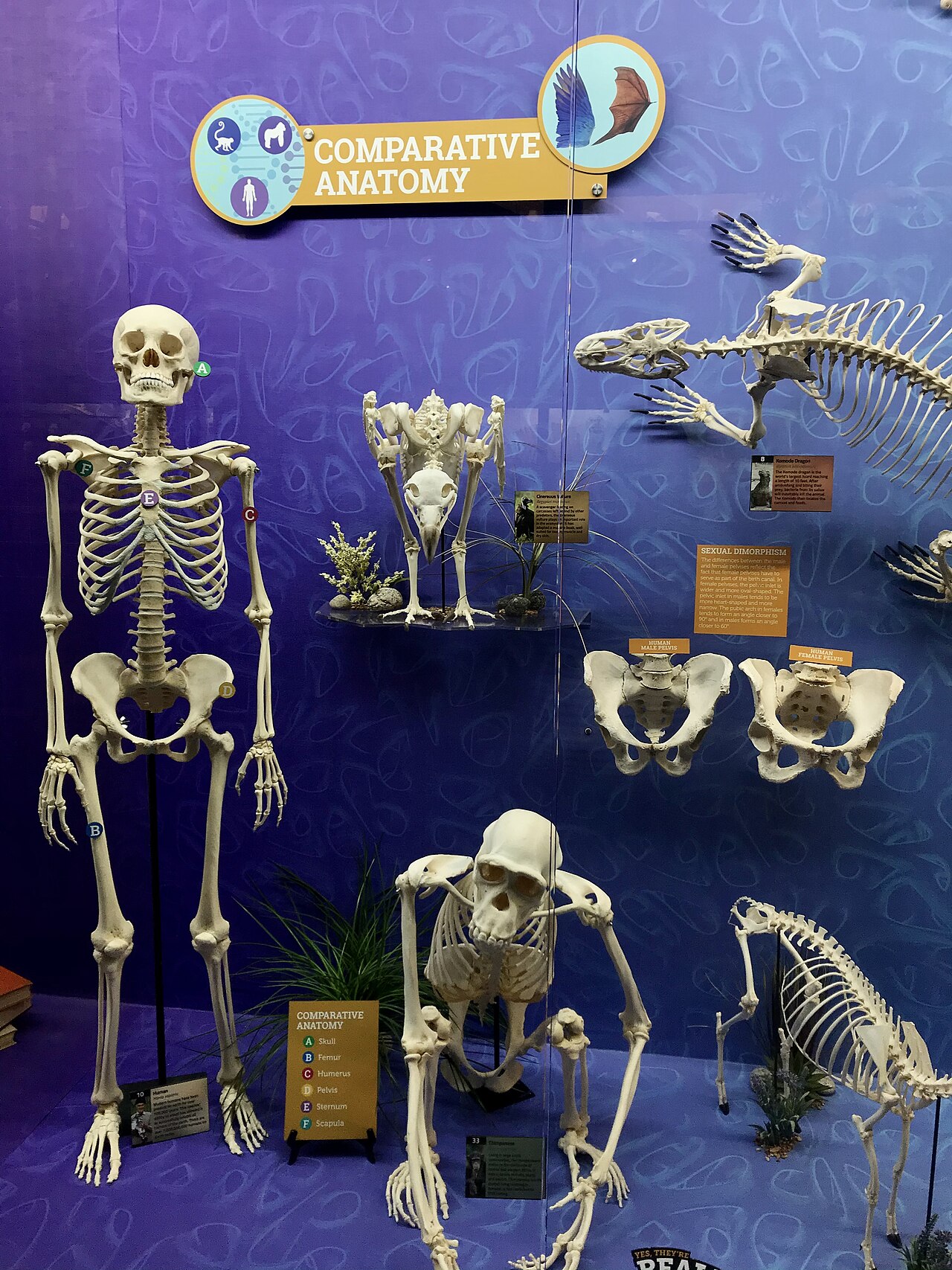
Photo: Wikimedia Commons
You are made of trillions of tiny building blocks called cells. Cells join together to make tissues, tissues make organs, and organs work together in systems. Your body has many systems — the skeleton holds you up, the muscles move you, the heart and blood carry food and oxygen everywhere, and the brain controls it all. The best part? All of it works together, day and night, even while you sleep.
Your Skeleton: 206 Bones!
An adult human has 206 bones. That is your skeleton — the strong frame that holds your body up, protects your soft organs, and gives your muscles something to pull on. When you were a baby, you had about 300 bones! As you grew, some of those bones joined together, or fused, to make bigger, stronger bones.
Your longest and strongest bone is the femur, the thigh bone in your leg. Your smallest bone is the stapes, a tiny bone inside your ear that is smaller than a grain of rice — yet it helps you hear! Your skull is like a helmet that protects your brain, and your ribs are like a cage that protects your heart and lungs.
Bones are alive. They are not dry and dead like the skeletons you see in a museum. Inside your body, bones are growing, repairing themselves, and making new blood cells in their soft middle, called bone marrow. That is why eating foods with calcium, like milk and cheese, and playing outside in the sunshine help your bones grow strong.
Your Heart: A Pump That Never Rests
Your heart is a muscle about the size of your fist, sitting in the left side of your chest. Its job is to pump blood all around your body. It beats about 100,000 times every single day — that is more than 3 billion beats in a long lifetime — and it never takes a holiday!
Blood is like a delivery service. It carries oxygen and food to every part of your body, and it carries away waste that your body does not need. Your blood travels through tubes called blood vessels. If you stretched out all your blood vessels in one line, they would go around the Earth more than twice! An adult has about 5 litres of blood in their body.
Put your hand on your chest and feel your heartbeat. When you run or jump, your heart beats faster, because your muscles need more oxygen. When you rest, it slows down. A healthy adult heart rests at about 60 to 100 beats every minute. You can feel your pulse in your wrist too — press two fingers gently on the inside of your wrist and count the beats.
Your Brain: The Boss of Everything
Your brain is the control centre of your whole body. It is protected inside your skull, and it is always busy — even when you sleep. It thinks, it remembers, it helps you learn new things, and it tells your body what to do. It also controls things you never think about, like breathing and blinking.
Your brain is made of billions of tiny nerve cells called neurons. They send messages to each other using tiny electric signals, faster than you can blink. Every time you learn something new — a new word, a new game, a new song — your brain makes new connections between these cells. That is why practice makes you better at things: you are literally building your brain!
Your brain needs sleep to do its best work. While you sleep, your brain sorts out the day, stores memories, and gets ready for tomorrow. Kids aged 8 to 12 need lots of sleep — usually 9 to 12 hours a night. So going to bed on time is not just a rule; it is brain food!
Your Five Senses
You learn about the world through your five senses: sight, hearing, smell, taste and touch. Each sense has a special organ that sends messages to your brain.
Sight: Your eyes are like tiny cameras. Light enters through the front, and the back of your eye sends a picture to your brain. You blink thousands of times every day to keep your eyes wet and clean.
Hearing: Your ears catch sounds — vibrations in the air — and turn them into signals your brain understands. That tiny stapes bone we met earlier is part of the chain that carries sound inside your ear.
Smell: Your nose can detect thousands of different smells. Smell and taste work together — that is why food tastes boring when your nose is blocked by a cold!
Taste: Your tongue has thousands of tiny taste buds. They sense sweet, salty, sour, bitter and a fifth taste called umami, the tasty flavour of foods like tomatoes and cheese.
Touch: Your skin is your largest organ, and it is full of tiny sensors. Touch tells you if something is hot or cold, soft or rough, and it warns you about danger — like pulling your hand away from something hot.
Breathing, Eating and Growing
You breathe about 20,000 times every day. When you breathe in, air goes into your lungs, which take oxygen from the air and pass it into your blood. When you breathe out, you push out a gas called carbon dioxide, which your body does not need. Plants do the opposite — they take in carbon dioxide and give out oxygen. You and plants help each other breathe!
When you eat, your food travels on a long journey through your body. It is chewed in your mouth, mixed in your stomach, and broken down in your intestines, where the good parts pass into your blood to feed your body. The whole journey is about 9 metres long! Your body uses food for energy, for growing, and for repairing itself.
Your body is always growing and changing. Your bones get longer, your muscles get stronger, and your brain makes new connections every day. Eating good food, drinking water, moving your body and sleeping well are the four best things you can do to help your amazing body do its job. You can learn more about food on our Food & Nutrition page.
